Seeing through a forester’s eyes
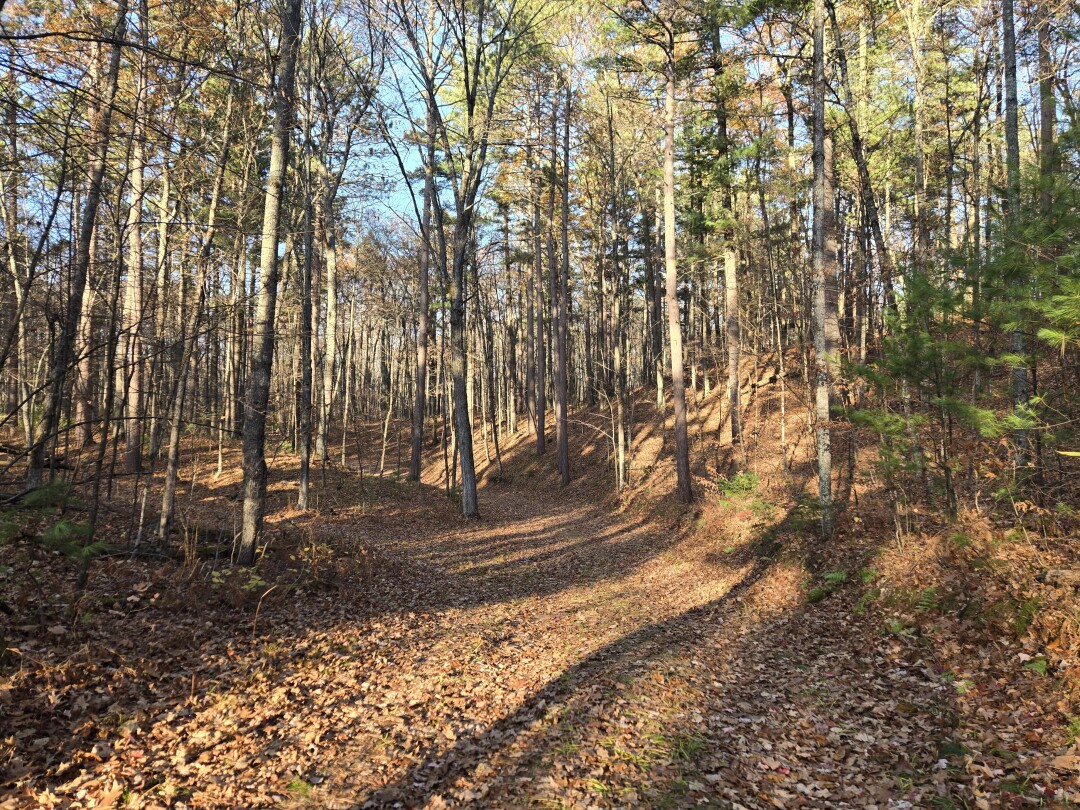
A look into the forest landscape. Photos by Heaven Walker.
A crisp fall breeze floated through our group as we stomped through the forest, our shoes crunching on fallen leaves and frost.
Fall had arrived in the Northwoods, bringing spectacular colors, cool temperatures and no bugs.
Our group mission, to learn more about the forests of the Northwoods, and the forestry techniques used to manage them. Our gallivant was made even more special by our guest for the day, a forester who brought a new perspective to our adventure.
It’s not often that I wander into the woods specifically to think about how a particular forest could be managed, or think decades into the future and try and imagine what that forest may look like over time. It was an exercise in a different way of thinking, and it was eye opening.
To see the forest through a forester’s eyes, is to see the big picture of the forest. With each forest type we visited, we walked through the same steps.
First, we started by looking at the trees. What species dominated the forest? By noticing who was growing, we could determine what type of forest we were in. The tree species that were growing also told us about the soil of the forest.
If we were standing in a forest dominated by white and red pines, who do not like wet soils, we would know that the soil was well drained and sandy. If we spotted sugar maples, basswoods and red oaks, we would know we were in a hardwood forest with moist, rich soils.
Once we identified who was growing, and the type of forest we had, we were encouraged to take a closer look at our surroundings.
Were there a lot of dead trees? If so, maybe the dominant species is reaching the end of its lifespan, and will slowly make room for others to grow as they die back.
Is there growth in the understory? If the understory is sparse, it could mean there isn’t enough sunlight reaching through the canopy to allow for new growth.
Do any of the trees have evidence of disease? The presence of disease could indicate that the forest is experiencing stressors, which are making the trees more susceptible to disease.
How closely were the trees growing together? If a lot of the trees are growing close together, they are likely competing for resources, and hindering each other’s growth.
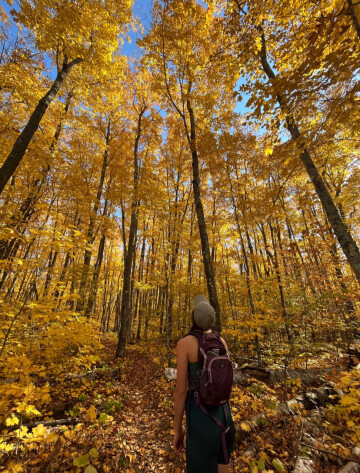
Each detail we noticed helped us to understand what was going on in the forest, and in turn helped us to decide what management practices could be used to improve the forest.
For example, a prescribed burn could be used to open up the understory and make room for new growth, especially for a forest containing oaks, which can rely on fire for regeneration. A thinning harvest can also be useful in improving forest health. By harvesting the trees in an earlier stage of growth and leaving the more mature trees in the forest, competition for sunlight, water and nutrients is reduced on the remaining trees, allowing them to grow faster and healthier.
The other option was to leave the forest be, and allow Mother Nature to do her thing in shaping the forest.
Standing in the woods, discussing all the ways to manage forests, it hit me as to how much of a lasting impact we can have on the landscape, for better or for worse.
Our forest ecosystems in Northern Wisconsin are still recovering from the cutover event. Through the late 1800s to the early 1900s, our forests full of old growth hemlocks, white pines and many other tree species were clearcut for lumber. All that was left of our forests were cut stumps, slash and bare land. Our forests will never be the same as they were before.
But there in the woods with the forester, I can acknowledge that we have come far in how we care for our forests, and are learning from our past.
Seeing through a forester’s eyes once again, I see hope for our northern forest health, through the passionate people who care for them, and through sustainable forest management.
Heaven Walker is Educator/Naturalist at the Cable Natural History Museum. For more than 50 years, the Cable Natural History Museum has served to connect you to the Northwoods. The Museum’s new exhibit, The Wetland Way is now open! Discover how life thrives at the intersection of soil and water, and why we must care for these special places as they care for us. Follow us on Facebook, Instagram, YouTube, and cablemuseum.org to see what we are up to.