Charisma’s place
In 4th grade I told my classmate and next-door neighbor, Becky, that Richard Nixon would beat her parent’s presidential choice John Fitzgerald Kennedy.
In 5th grade our family took three generations in a two-car caravan to Washington DC. Near Lafayette Park I was the only one to miss seeing President Kennedy as his limousine drove to the White House.
In 6th grade I was delighted when my family successfully lobbied my Republican grandfather to accept Kennedy’s invitation to Washington D.C.
JFK, a war hero himself, was honoring combatants who had been awarded the Medal of Honor. (I’ve often graced my musings on America with the photo of George Robb shaking Kennedy’s hand.)
I was in 7th grade, attending a school named after assassinated President Garfield, when Mrs. Jones stepped into our class to tell us the president had been shot.
I recall watching CBS news anchor Walter Cronkite taking of his glasses to wipe away tears as his voice caught on camera. He was reading the bulletin confirming the president’s death.
That stuck with me with as much force as watching Kennedy’s young children standing at attention as their father’s hearse passed before them on his last journey.
My rational republican family sheltered me from the paranoia which swept America in the wake of the much-maligned Warren Commission’s investigation. We were satisfied that assassin Lee Harvey Oswald had acted alone.
Thirty years on I was annoyed to learn that my teenage son had bought into the conspiracy. It added fuel to my ridicule of a neighbor who wrote a book supporting the conspiracy in one of my early Reader columns.
I read Kennedy’s book Profiles in Courage in junior high. It is one of only three books I’ve read twice. I was proud to read his chapter about a Kansas Senator he credited with courage. Senator Ross cast the critical vote that acquitted Lincoln’s successor, Andrew Johnson, after he was impeached.
Later history reading has tempered my enthusiasm for Senator Ross.
History reading also led me to speak out against Richard Nixon in his 1968 campaign to replace President Lyndon Johnson. Johnson had won my parent’s vote in 1964. Mom’s refusal to vote for Goldwater damn near broke her father’s heart.
Dad’s support for Lyndon was shortlived. I vividly recall Dad cursing a blue streak every time Walter Cronkite announced that Johnson was sending more troops to Vietnam.
Lyndon was a mixed bag. His martyred predecessor’s charisma had led voters to think Kennedy would fight for Civil Rights.
Kennedy’s soaring rhetoric was mostly lip service. He knew the solid south was implacable. However, his assassination created a climate that allowed the sly new President to sidestep Jim Crow’s ferocious defenders.
This second President Johnson made up for the first President Johnson, who was saved by Kansas Senator Ross’s vote. Andrew Johnson had no use for Abraham Lincoln’s civil rights platform.
One century later the second President Johnson finally handed Black Americans an enforceable Constitutional right to vote.
My Dad had no complaints against Johnson’s call for Civil Rights. His curses came from his premonition that his junior high son might be asked to defend a phony democracy in Vietnam.
He had good reason. Five years later young Harry Welty avoided gunfire with a college deferment. It was rich America’s escape clause.
As I entered Mankato State in 1969 my fellow students simply redirected their protests from the Democrat Johnson to the Republican Nixon.
These disquieting events gave Jack Kennedy’s reputation some shelter but history catches up with everyone.
Today history readers know that Jack had numerous flings. Generous editors overlook much. including mine who felt too much detail detracted from my overall thesis. It’s there for the asking on the Internet.
Fortunately, his idealistic rhetoric and martyrdom permitted Lyndon Johnson to pass historic Civil Rights laws. It also got Americans to the moon within the decade, even though Kennedy never took the idea all that seriously. It was Richard Nixon who got to welcome our astronauts home. Take that, Becky, from the first paragraph.
In great measure these are legacies of Kennedy’s charisma and martyrdom. Great as they are they pale compared to the terrible future he helped the world avoid.
Kennedy had just read Barbara Tuchman’s history of World War 1 as Russian ships were sending a nuclear arsenal to Cuba. That was the war my grandfather blamed on Democrats and which, ironically, got him invited to the White House 46 years later.
Tuchman’s book spelled out the blindness of world leaders who blundered into the mindless maw of WW I. With that book in hand Kennedy resolved not let the Cuban Missile Crisis become Dr. Strangelove.
Had he followed his generals today’s Earth might be populated by radioactive mutants instead of my glorious grandchildren.
Kennedy was beloved in Europe. He fathered the Peace Corps. My family hosted an African foreign exchange student in 1968 who revered our martyred president so much that he cheered his younger brother Robert’s presidential run.
Bedru Beshir’s eyes were glued to our TV during Bobby’s California primary victory. After my family went to bed Bedru stayed up to savor that victory. Then he witnessed the assassination of a second Kennedy.
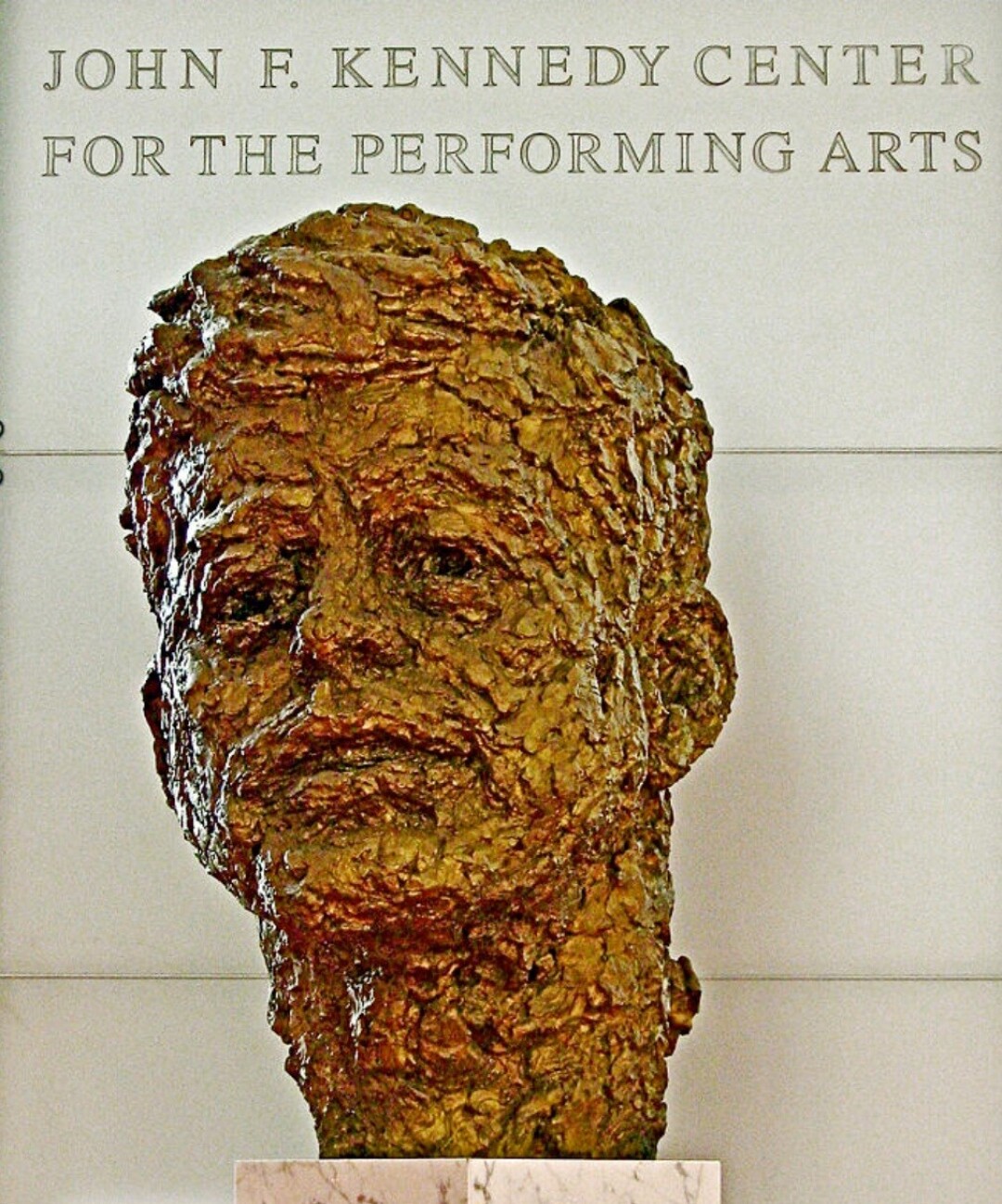
It is a great shame that our current president is treating the memorial to John Fitzgerald Kennedy the way a dog treats a fire hydrant.