Fall food and wild fellowship
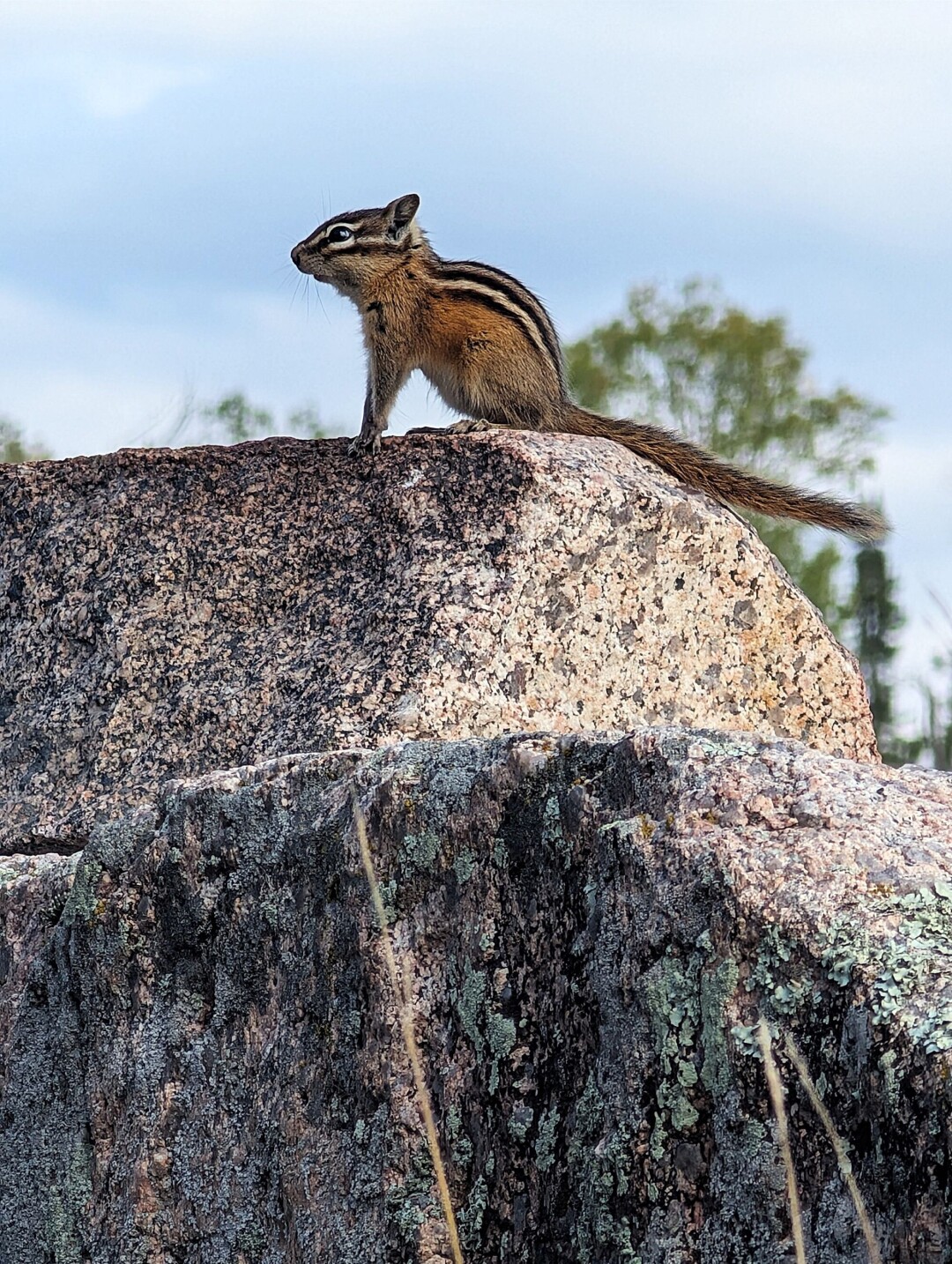
Above, this least chipmunk took a break from foraging on grass seeds, birch catkins and hawthorn fruits to watch for danger. Photos by Emily Stone.
When my friend Deb and I launched my canoe on Gunflint Lake in Northeastern Minnesota, the gentle tailwind that pushed us north toward the narrows could not have been more different than the gusty first day of the museum’s Boundary Waters trip in early September.
I had spent a week in the front country catching up on emails and packing another round of food. Then I headed back into the wilderness.
On a gorgeous, late September day, Deb and I slipped in nine miles before lunch, and were thrilled to find a quiet campsite in James Bay. Or so we thought.
 James Bay.
It was far enough away from the Saganaga Corridor that the rumble of motorboats barely reached us and the neighboring campsite stayed unoccupied, but the sunny hillside soon became a hive of activity.
It started when a streak of movement materialized into the racing stripes of a least chipmunk coming to investigate our lunch on the slab of pale pink Saganaga Granite.
The mini-bear darted close, then scurried off, posing motionless for brief moments to survey the area for danger. From the top of a lichen-covered rock, it sounded the characteristic clucking alarm call, tail hiccupping with each repetition.
Even though it sniffed hard at my little baggie of trail mix, I made sure the chipmunk never got a single peanut. Cute though they are, feeding wildlife at campsites is a recipe for problems.
It seemed to be finding their own food just fine anyway. Pulling long blades of grass through tiny paws, it nibbled on the seedheads. Scrambling acrobatically up a birch sapling, it grabbed catkins from the most slender of twig tips.
And, upon hearing a rustle in an overgrown area behind the fire grate, we discovered a chipmunk feasting on the tiny red fruits of a hawthorn bush.
As we watched, what we thought was a single chipmunk morphed into three individuals scurrying busily around the campsite.
Chipmunks are usually solitary, so this furry flurry likely included Mom and two almost-independent offspring. Starting in October, chipmunks head underground and go through cycles when their body temperature drops from 94 degrees to the ambient temperature of their burrow—around 40 degrees.
During these periods of hibernation, their heartbeat slows from the normal rate (which is up to 350 beats per hyper, stress-filled minute) down to 4 beats per minute.
Every few days throughout the winter, the chipmunks will warm up, wake up and feed on food they stored during this glorious fall weather.

A wel-camouflaged ruffed grouse prepares to jump into a wild rose bush for an evening meal of rose hips. This is one of their favorite fall foods.
Later, as Deb and I shared a pot of chili for supper, a rustle in the bush behind the fire grate gave away the position of a ruffed grouse.
The Ham Lake Fire burned over our route in 2007, and the regenerating forests of aspen, birch and other sun-loving shrubs are perfect habitat for these beautiful birds.
Precariously positioned on the flexible stems, she stretched her neck to rip at the scarlet rose hips like a cat playing with a Christmas tree. When she hopped down, we lost sight of her, until she reappeared in the same hawthorn bush where the chipmunks had been earlier.
On an excursion into the woods, I was entertained by another grouse ripping leaves from the quaking aspen trees overhead. These are all typical fall foods for “wood hens,” before they transition to the buds on aspen and birch trees out of necessity and their gizzards and digestive tracts grow to accommodate the tough, bulky, winter food.
Fall isn’t just about feeding. During our first evening on Clove Lake, Deb had been startled by the black neck ruff and fanned tail of a male grouse in full display while a female watched from a nearby fir tree.
This time of year, as the young disperse, the established males will drum and display to make sure that no “young buck” usurps their breeding territory and associated drumming log before next spring.
With our bear-resistant food canister closed up and squares of chocolate eaten, Deb and I chatted in the setting sun. When we fell into a contented silence, a family of beavers on the far side of the lake took up the thread of conversation with their adorable grunts.
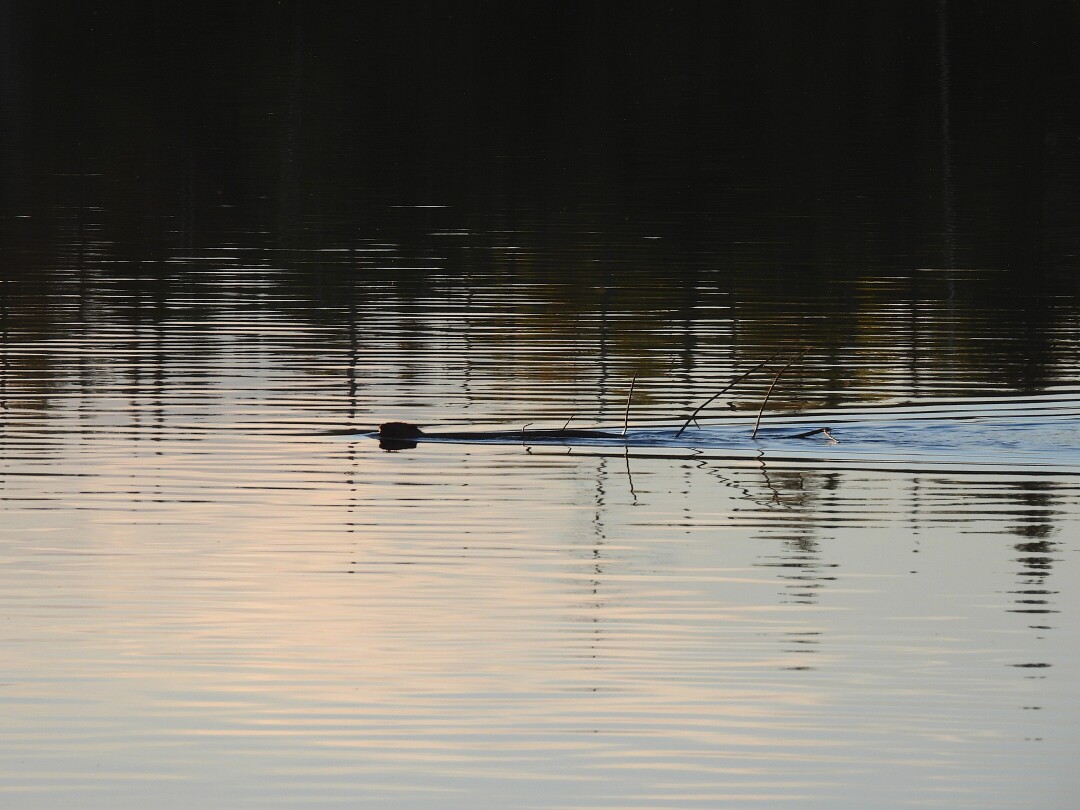 A swimming beaver leaves a wake.
We’d paddled past several active beaver lodges on our trip, each with a good supply of willow and aspen twigs stashed out front in their “beaver freezer.”
All winter long, the parents, this year’s kits, and any surviving siblings from the previous year will have access to the twigs from under the ice, and will tote snacks up into the lodge’s feeding platform for family dinners.
The chipmunks, grouse and beavers have the right idea, I think. Fall is the perfect season for enjoying good food and fellowship, whether you’re at a campsite with friends, in a lodge made of sticks or at your community’s harvest dinner.
What friends are you going to celebrate the season with next?
Emily Stone is Naturalist/Education Director at the Cable Natural History Museum. Her award-winning third book, Natural Connections3: A Web Endlessly Woven, is available to purchase at www.cablemuseum.org/books and at your local independent bookstore, too. For more than 50 years, the Cable Natural History Museum has served to connect you to the Northwoods. Our Fall Calendar is open for registration! The Museum’s new exhibit, The Wetland Way is now open! Discover how life thrives at the intersection of soil and water, and why we must care for these special places as they care for us. Follow us on Facebook, Instagram, YouTube, and cablemuseum.org to see what we are up to.