Climate Week coming in September
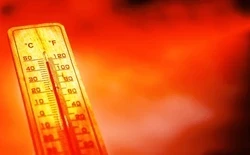
Every day, the climate emergency seems to be getting more critical and dangerous. It feels like extreme weather events are attacking us from the north, south, east and west. And there are those days when it’s hard to mentally comprehend and emotionally assimilate the short and long-term impacts of what’s happening.
Right now, Duluth and northeast Minnesota are experiencing a severe drought that shows no signs of letting up. And with this drought, there are concerns about a potential wildfire season that could last until October or November.
The National Oceanic and Atmospheric Agency (NOAA) just announced that July was the hottest month on record. Daytime maximum temperatures averaged 89.5 degrees Fahrenheit and nighttime temperatures averaged 64.2 degrees Fahrenheit - 3.7 degrees above the all-time average.
This month, we’ve been watching the extensive wildfires around Spokane, Washington. As reported by KREM News in Spokane, the three major wildfires have damaged or destroyed more than 900 buildings and forced about 65,000 people to evacuate their homes.
On Aug. 7, ABC News reported that Lake Mead, the largest reservoir in the U.S., registered its lowest water level on record.
Three days later, CNN reported that Western Europe broke temperature records, with the average temperatures for June and July at 70.9 degrees Fahrenheit - about 2.79 degrees above the average. And July was also the hottest month for the world’s non-polar oceans, with record high temperatures in the Atlantic and Mediterranean.
On Aug. 11, The Guardian reported that the Rhine and Po Rivers in Europe are at record low levels. The next day, The Guardian also reported that Europe is heating up twice as fast as other continents and is now 2.5 degrees Celsius hotter than pre-industrial levels.
And on Aug. 14, Aljazeera reported that wildfires in Europe have forced thousands to flee their homes and burnt 1.24 million acres.
In a commentary with The Guardian on Aug. 4, Rebecca Solnit argued that the 20,000 people who have died from the extreme heatwaves in Europe and the people in Phoenix, Az., who are getting severe burns from falling down on super heated asphalt are proof that we now find ourselves in a “climate war zone.”
And in the Guardian on Aug. 6, Seth Klein wrote, “...we must genuinely adopt a wartime-scale approach, a new mindset to mobilize all of society.” Citing nearly a thousand wildfires in his home country of Canada, Klein proposed that the current climate events around the world leave no doubt that we are experiencing a climate emergency.
In a recent series of articles in the Duluth News Tribune, Jimmy Lovrien has been writing about climate change driving the heatwaves and the severe droughts in Duluth and Northeastern Minnesota.
On July 19, Lovrien wrote, “Conditions along Minnesota’s border with Ontario, Canada, where multiple wildfires are burning, saw highs top 100 degrees Monday, which is occurring at least five times more frequently than in a world without human-caused carbon pollution, Climate Central said. The rest of Minnesota saw temperatures Monday that were two to four times as likely to occur due to climate change.”
If you read the Climate Vulnerability Assessment that was presented to the Duluth city government in 2018 or the Climate Emergency Resolution passed by the City Council in 2021, it’s very apparent that the climate conditions in our city continue to get more extensive and severe. It’s very imperative that the citizens of Duluth need to roll up their sleeves and get to work addressing this growing climate emergency.
During the week of Sept. 14-20, the Duluth Citizens Climate Commission will be coordinating Climate Week: Duluth in an effort to engage, educate and empower the citizens to take more active roles in addressing climate change in our city.
The commission will be distributing a climate briefing to community leaders. The public library will be displaying books on climate change and the environment at the public library. PACT-TV will be broadcasting the Climate>Duluth series. And citizens will be speaking at the meetings of the City Council and Energy Plan Commission.
On Thursday, Sept. 17, at 6 pm, the Commission will host a Climate Town Hall in Duluth.
Titled “Imagining Duluth’s Climate Future,” the citizens are invited to St. Paul’s Episcopal Church to share their personal climate stories and to work together to create Duluth’s climate story for the future.
If you would like more information about Climate Week: Duluth and the Climate Town Hall, email risson1954@gmail.com.
.