Help a Chum – get rhubarbed
“You can’t go wrong with rhubarb for drama in the garden.”
Nina Mukerjee Furstenau
The Pocket Rhubarb Cookbook
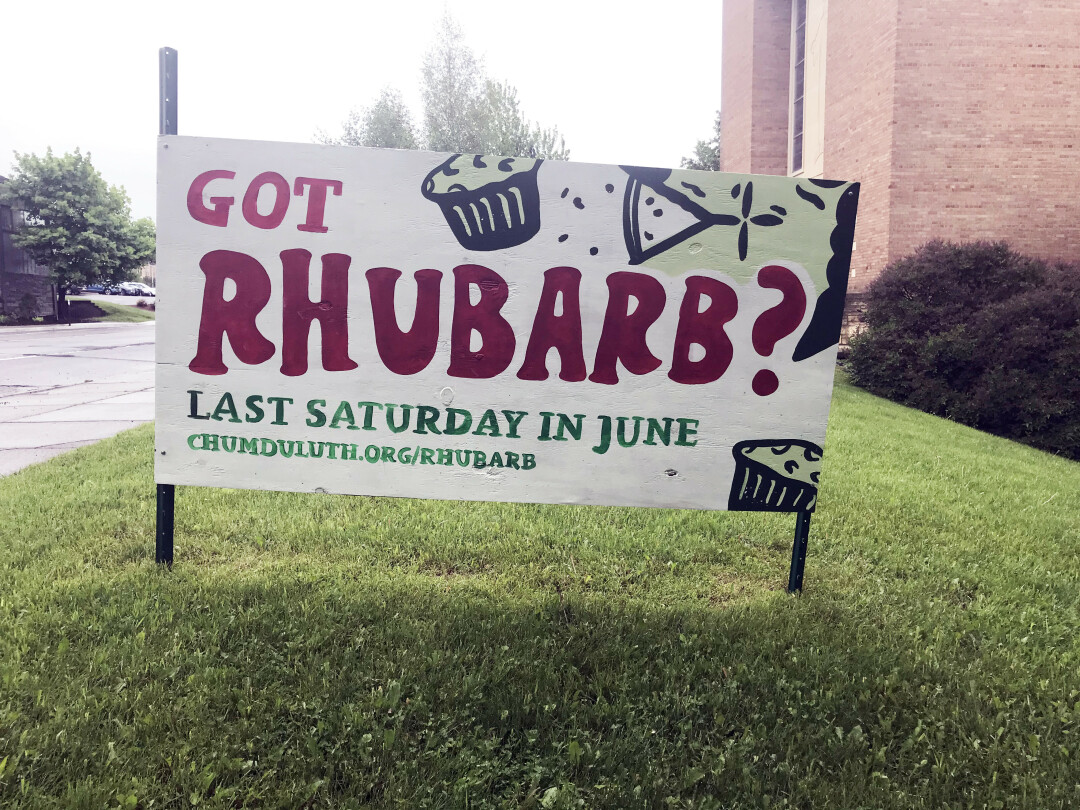
What: Chum’s 2026 Rhubarb Festival
Where: Asbury United Methodist Church, 6822 Grand Ave., Duluth
When: Saturday, June 27, 9 am-3 pm
It’s ironic that a word once used to mean a heated argument also is a word for the common vegetable that helps to raise funds to support the nonprofit that has become the largest safety in Duluth.
This Saturday is the 21st annual Chum Rhubarb Festival, the nonprofit’s largest fundraiser of the year, all based on the humble rhubarb.
The festivities at Asbury United Methodist Church, include the annual Rhubarb Bake Sale, along with the Rhubarb Café, crafts & games, kids’ activities, live music and several newly-debuted activities for the entire family to enjoy.
Chum was founded in 1973 when 10 churches in Duluth’s Central Hillside neighborhood pooled their resources to meet the needs of the neighborhood’s many low-income residents. Today, 44 congregations across the city are involved in Chum work with the homeless, the hungry and others in need.
That’s what makes the idea of the humble rhubarb being used to support the Chum mission so special. Here are a few rhubarb facts to chew on:
• The name “rhubarb” means barbarian root. It comes from the Greek rha barbaron (or, as a Bon Appetit writer summed it up, “not from around here”). The Greeks knew the plant we call rhubarb as an import, its roots having been brought from China at great expense.
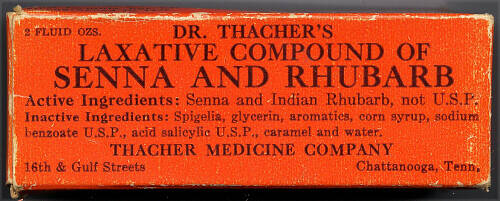
• Rhubarb root has long been used for a variety of conditions in traditional Chinese medicine, so many conditions, in fact, that it is called “The General” of Chinese herbal medicines. U.S. studies have found the root to have anti-inflammatory properties and has been shown to decrease the activity of isolated immune cells.
• Rhubarb is packed with minerals and vitamins, high in fiber and low in calories with only 15 calories per ½ cup. There are more than 40 polyphenol compounds in rhubarb, including anthocyanins, the same disease-fighting compound in blueberries. Cooking rhubarb increases its polyphenol content and overall antioxidant capacity. Research suggests there are beneficial compounds in rhubarb that may fight cancer, lower cholesterol, reduce inflammation, lower blood pressure and protect eye and brain health.
• Imported to the West, rhubarb remained a medicinal plant with only the root used until the 18th century. The advent of processed sugar, which made the tart stalks (petioles) palatable.
• The word “rhubarb” is sometimes used to imitate the sound of a crowd. In the world of television, theater and films, groups of actors often repeat the word “rhubarb” as a background noise, creating the effect of a somewhat menacing crowd.
• Rhubarb is simply known as “pie plant” in some areas. The recipe above comes from a turn of the 19th century cookbook produced in Illinois.
• In England, if someone’s says you’re taling “rhubarb,” it means the same as talking rubbish.
• Is rhubarb a fruit or a vegetable? Botanically, it’s a vegetable, as its grown for its edible foliage, not for its “fruit,” which are dry seeds and highly unpalatable). But since it is often cooked in desserts – pies, compotes, crumbles, etc. – ), many claim it as a fruit, and, in the state of New York, rhubarb was officially declared a fruit during a customs court case in 1947.
• Rhubarb is one of the most perennial of all vegetables. Plants can live for 60 years or more.
• Rhubarb forcing is the process of covering established crowns in late winter to block out all light. This tricks the plant into rapid early growth, producing pale, extraordinarily tender and sweet pink stalks that are ideal for desserts and harvesting weeks ahead of the regular outdoor season.
Rhubarb’s tangy possibilities inspire cookbook
As I worked with the rhubarb, I began to see how this plant ended up across the U.S. and world. First, it’s pretty. Second, it adds a lot of zip to everything you make with it. Third, and this is especially for the nutritionists out there,it gives your body a dose of vitamin A, vitamin C, citamin K, potassium, manganese, magnesium, folate, riboflavin, niacin, iron and phsphorus. Fourth, and perhaps most importantly, it tastes like spring.”
Nina Mukerjee Furstenau
The Pocket Rhubarb Cookbook
For many Minnesotans, rhubarb is a familiar sign of summer. The tart red stalks have long found their way into pies, sauces and crisps, often sweetened with plenty of sugar. But according to author Nina Mukerjee Furstenau, rhubarb’s potential stretches far beyond dessert.
Furstenau explores those possibilities in The Pocket Rhubarb Cookbook, a collection of recipes and stories celebrating one of the Midwest’s most recognizable garden plants.
“I always thought of it as a dessert ingredient,” Furstenau said. “What surprised me most was how versatile it is.”
A Missouri resident, Furstenau said rhubarb’s brief growing season in her area helped spark her fascination with the plant. Unlike northern states where rhubarb thrives throughout much of the summer, Missouri’s season lasts only a few weeks.
“It’s kind of sensational when it comes up,” she said. “I’ve always been intrigued by rhubarb.”
Her interest deepened years ago while spending time in the Pacific Northwest, where she encountered towering rhubarb plants that seemed almost otherworldly.
“They looked like they were from outer space,” she said.
The cookbook project came about after Furstenau was approached about writing a cookbook devoted entirely to rhubarb. Although she has spent much of her career writing about food, culture and identity, she had never produced a traditional cookbook.
Researching rhubarb’s history proved just as fascinating as developing recipes. Furstenau traced the plant’s origins through Central Asia and began wondering how it was used before sugar became widely available.
“That led me to exploring savory uses,” she said.
The result is a collection of recipes that challenge traditional notions of rhubarb. Among her favorites are a blueberry-rhubarb barbecue sauce, a tagine-style stew, lentil dishes influenced by her Northeast Indian heritage, salsas and refreshing beverages.
“The rhubarb lifts the flavor,” she said. “It adds a little zip that makes a meal more interesting.”
She discovered that rhubarb’s tartness can brighten dishes that might otherwise feel heavy, particularly stews and lentils.
“I was excited by that,” she said. “It can make the difference between feeling satisfied and feeling overly full.”
The cookbook includes more than 60 recipes, many developed and tested during an intense nine-month period. Her husband served as the primary taste tester throughout the process.
“He went through more than 75 recipes,” she said with a laugh. “There were days when we had two or three rhubarbdishes.”
Even after all that testing, he still likes rhubarb.
“That’s probably a good indication that it can remain interesting,” she said.
Furstenau also emphasizes practical ways to preserve rhubarb for year-round use. She recommends cleaning and chopping stalks before freezing them or cooking them down into a pulp that requires less freezer space.
That advice resonates in northern states where gardeners often harvest more rhubarb than they can immediately use.
While recipes form the heart of the book, Furstenau believes the history behind food deserves attention as well.
“The origins and food trails of the foods we eat are fascinating,” she said. “To see where something came from and how it got to Minnesota or Missouri is just as interesting to me as creating a dish with it.”
Since publication last year, readers have continued sharing family recipes and new ideas with her, reinforcing the plant’s enduring place in home cooking traditions.
For Furstenau, that ongoing conversation is part of the appeal.
“I could write and write about the history of a fruit or vegetable,” she said. “I just find it endlessly interesting.”
For Minnesotans who grew up eating rhubarb sauce, pie or even the occasional raw stalk straight from the garden, Furstenau’s cookbook offers a reminder that there may be far more ways to enjoy the humble plant than they ever imagined.